Affiliate note: This article contains affiliate links. If you buy through one, we may earn a commission at no extra cost to you. As an Amazon Associate we earn from qualifying purchases.
A furnished kitchen can mean almost anything.
Sometimes you arrive to a decent set of pans, sharp knives, dishes, utensils, and a coffee maker.
Sometimes you get one dented skillet, three forks, and a colander that looks older than the hospital.
For travel nurses, the goal is not to recreate a permanent kitchen.
It is to build a small, functional setup that lets you cook, meal prep, make coffee, and survive thirteen weeks without hauling half your house across the country.
Shopping for travel nurse kitchen essentials?
Start by Inspecting the Rental
Before buying anything, check what is already there.
Look for:
- pots and pans
- knives
- cutting boards
- cooking utensils
- plates and bowls
- glasses and mugs
- food storage containers
- coffee maker
- toaster
- microwave
- oven
- dishwasher
- basic pantry items
Furnished housing varies wildly.
Do not buy a kitchen kit based on assumptions.
Bring the Few Things You Actually Care About
There are some kitchen items people are unusually particular about.
That might be:
- favorite coffee setup
- one good knife
- travel mug
- water bottle
- meal prep containers
- small cutting board
If an item is compact and genuinely improves your daily routine, it may deserve luggage space.
One Good Knife
Rental knives are often terrible.
A single reliable chef’s knife or utility knife can make cooking much easier.
If you bring one, transport it safely in:
- knife guard
- protective sheath
- secure case
Do not toss a loose kitchen knife into a moving bag.
If you fly, pack it according to current airline and security requirements.
Small Cutting Board
A lightweight cutting board is useful because rental cutting boards can be:
- missing
- heavily worn
- too large
- questionable
Choose something thin and easy to clean.
You do not need a butcher block.
Food Storage Containers
For nurses working long shifts, food storage matters.
A small nesting set can cover:
- lunches
- leftovers
- meal prep
- snacks
Look for containers that:
- nest together
- have interchangeable lids
- are microwave-safe when appropriate
- are dishwasher-safe when appropriate
- seal reliably
Avoid giant sets with twenty sizes you will never use.
Travel Mug
If coffee travels to work with you, bring a good insulated mug.
It can serve as:
- commute mug
- shift mug
- road-trip cup
- hotel coffee cup
A leak-resistant lid matters more than fancy features.
Water Bottle
One good reusable bottle can work for:
- shifts
- gym
- road trips
- flights
- days off
Choose something easy to clean and sized realistically for your workday.
Coffee Setup
Coffee is deeply personal.
Your rental may provide a coffee maker.
You may hate it.
If you know you care about coffee, choose a compact setup you will actually use.
Options include:
- small drip brewer
- single-serve brewer
- pour-over setup
- French press
- electric kettle with instant coffee or tea
Keep the setup simple enough to move.
One Small Appliance
One.
Maybe two.
Not six.
Good candidates include:
- compact air fryer
- small rice cooker
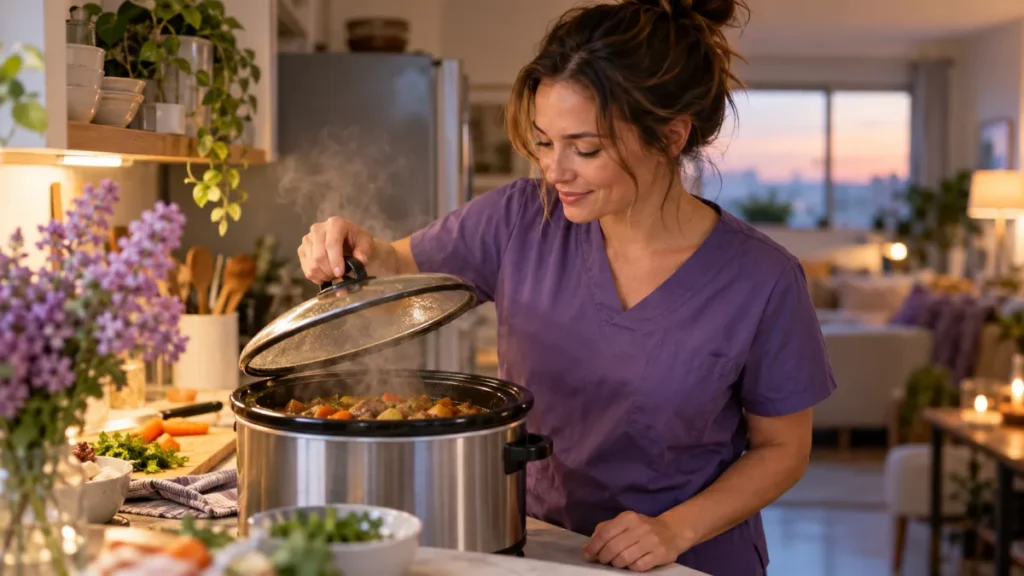
- slow cooker
- portable blender
- coffee maker
- electric kettle
Pick based on what you already cook.
Do not use a travel assignment as an excuse to buy appliances for a fantasy version of yourself who suddenly meal preps seven recipes every Sunday.
Basic Cooking Utensils
If the rental is missing utensils, you probably need only a few:
- spatula
- spoon
- tongs
- can opener
- peeler
- measuring cup
You do not need a 40-piece gadget set.
Compact utensil kits can be useful, but individual basics are often cheaper and easier.
Dish Towels
A couple of lightweight dish towels are useful.
They take almost no space and can help with:
- drying dishes
- wiping counters
- handling hot cookware when appropriate
Wash them regularly.
Reusable Bags
Reusable food storage bags can save space and work for:
- snacks
- chopped produce
- leftovers
- travel food
They also pack flatter than rigid containers.
Basic Pantry Starter
You do not need to transport your pantry.
Buy locally.
A simple starter might include:
- salt
- pepper
- cooking oil
- coffee or tea
- favorite seasoning blend
- rice
- pasta
- oats
- canned staples
Then build from there based on how you actually eat.
Spices: Keep It Small
Spice collections become ridiculous quickly.
If you cook often, consider a small travel spice kit or just bring your three or four most-used seasonings.
You can buy anything else locally.
Grocery Strategy for 13 Weeks
The first grocery trip should not look like you’re stocking a bunker.
Start with:
- breakfast basics
- shift lunches
- snacks
- coffee
- a few easy dinners
- cleaning supplies
You can expand once you understand your work schedule and kitchen setup.
Check the Refrigerator and Freezer
Temporary rentals can have:
- full-size refrigerators
- tiny apartment refrigerators
- little freezer space
- ice makers that do not work
Inspect before buying frozen food in bulk.
Meal Prep Around Your Schedule
Travel-nurse meal prep should be realistic.
If you work three consecutive 12-hour shifts, prepare food before the stretch begins.
Focus on:
- simple proteins
- easy sides
- grab-and-go breakfasts
- portable snacks
You do not need elaborate recipes.
You need food you will actually eat when tired.
Label Shared Food
If you share housing, label anything that could be confused.
Especially:
- meal prep containers
- specialty drinks
- leftovers
- expensive ingredients
A small marker or removable labels solve a lot of roommate confusion.
Do Not Buy a Full Dinnerware Set
If the rental has dishes, use them.
If it does not, buy only what you need.
For one person:
- two plates
- two bowls
- two glasses
- basic silverware
may be enough.
You are not hosting Thanksgiving.
Use What the Rental Provides First
Even if it is not perfect, try the existing setup.
You may discover the supposedly terrible pan works fine.
You may also discover the coffee maker is better than yours.
Avoid spending money just because the kitchen is unfamiliar.
What to Bring
Usually worth considering:
- favorite knife
- cutting board
- food storage containers
- travel mug
- water bottle
- coffee setup
- one small appliance
- reusable bags
What to Buy After Arrival
Usually:
- dish soap
- sponge
- paper towels
- food
- pantry basics
- missing utensils
- storage containers if needed
What to Skip
Usually:
- full cookware set
- giant knife block
- oversized appliance collection
- bulk pantry purchases
- decorative kitchen items
- fragile serving ware
Moving Out
Before leaving:
- Use up perishables.
- Donate unopened food where appropriate.
- Clean appliances.
- Wash your containers.
- Check cabinets and freezer.
- Pack only the kitchen gear you actually want to keep.
Do not move a half-empty bottle of cooking oil across three states unless you really want to.
The Travel Nurse Kitchen Rule
A good temporary kitchen should let you:
- make breakfast
- pack lunch
- cook dinner
- make coffee
- store leftovers
That is enough.
You are living there for thirteen weeks.
You are not opening a restaurant.
Related Travel Nurse Kitchen Guides
- Best Compact Air Fryers for Travel Nurses
- Best Small Rice Cookers for Travel Nurses
- Best Coffee Makers for Travel Nurses
- Best Food Storage Containers for Temporary Housing
- How to Stock a Kitchen for a 13-Week Assignment
Ready to pick one?