
Affiliate disclosure: Suitcases & Scrubs may earn a commission from qualifying purchases made through links on this page, at no additional cost to you.
A travel nurse can spend twelve hours standing during a shift and then spend another eight hours sitting in a car to reach the next assignment.
That combination is not exactly kind to your body.
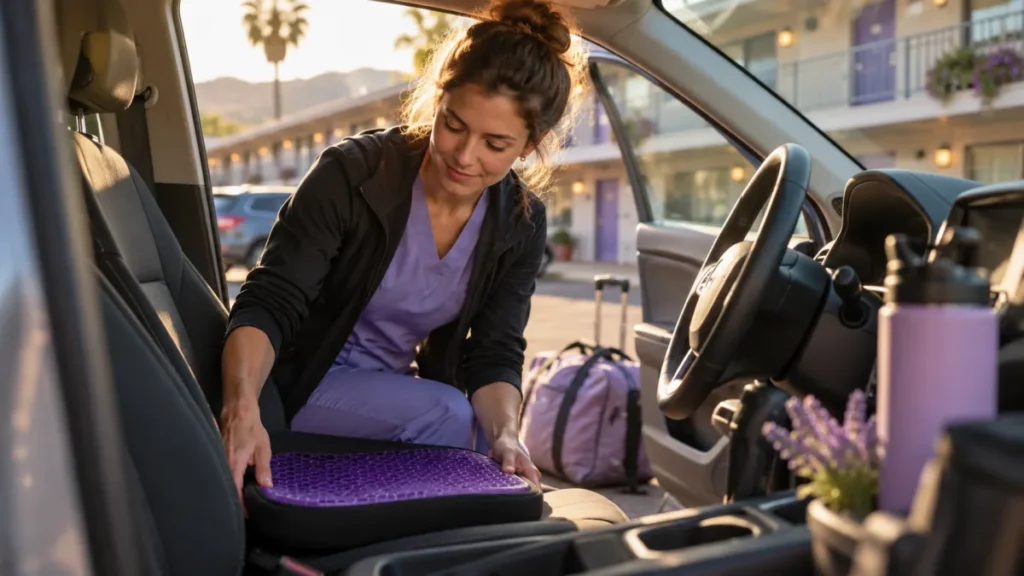
A supportive seat cushion can make long drives more comfortable, especially if your vehicle seat feels too firm, too flat, or simply does not fit your body well.
The goal is not to turn your driver’s seat into a recliner. It is to reduce pressure points without changing your driving position so much that pedals, mirrors, and airbags no longer fit you correctly.
Shopping for seat cushions for long drives?
Quick Picks
| Pick | Best For | Material | Why We Like It |
|---|---|---|---|
| Cushion Lab Pressure Relief Seat Cushion | Best overall | Memory foam | Supportive shape and strong pressure relief |
| Everlasting Comfort Seat Cushion | Best value | Memory foam | Popular, affordable, and portable |
| Purple Royal Seat Cushion | Best gel-style | Grid polymer | Breathable and pressure distributing |
| ComfiLife Gel Enhanced Seat Cushion | Best gel + foam | Memory foam + gel | Familiar ergonomic shape with cooling layer |
| Tempur-Pedic Seat Cushion | Best premium foam | TEMPUR material | Dense, supportive foam |
| TushGuard Seat Cushion | Best budget | Memory foam | Simple low-cost option |
Our Overall Pick: Cushion Lab Pressure Relief Seat Cushion
The Cushion Lab Pressure Relief Seat Cushion is our favorite overall because its contoured design is more purposeful than simply placing a flat slab of foam on the seat.
Why we like it:
- Designed to redistribute sitting pressure.
- Works in cars, temporary housing, and desk chairs.
- Portable enough to move between assignments.
- Useful beyond road trips.
- Contoured shape provides more support than many basic cushions.
Best for: Travel nurses who want one cushion for the car and temporary housing.
Shop: Cushion Lab Pressure Relief Seat Cushion
1. Cushion Lab Pressure Relief Seat Cushion – Best Overall
The Cushion Lab cushion uses shaped memory foam to support the sitting area rather than treating every body like a flat rectangle.
Why we like it
Travel nurses can use the same cushion in several places:
- Car
- Temporary apartment chair
- Home office
- Break-room seating
- Airport seating
That versatility makes it easier to justify carrying another item between assignments.
Keep in mind
A thick cushion raises your body.
After installing it, readjust your seat position, mirrors, steering-wheel relationship, and head restraint before driving.
Best for: Frequent long drives and multipurpose use.
Shop: Cushion Lab Pressure Relief Seat Cushion
2. Everlasting Comfort Seat Cushion – Best Value
The Everlasting Comfort Seat Cushion is one of the more common memory-foam cushions in this category.
Its U-shaped rear cutout is intended to reduce direct pressure around the tailbone area.
Why we like it
It is affordable enough to try without a major investment and portable enough to carry between the car and housing.
Keep in mind
Memory foam changes firmness with temperature. A cushion left in a very cold car can feel noticeably firmer until it warms up.
Best for: Budget-minded nurses.
Shop: Everlasting Comfort Seat Cushion
3. Purple Royal Seat Cushion – Best Gel-Style Option
The Purple Royal Seat Cushion uses the brand’s flexible grid material instead of traditional memory foam.
Why we like it
The open-grid design allows more airflow than dense foam and can distribute pressure differently.
That makes it appealing for people who find memory foam too warm or too soft.
Keep in mind
It has a very different feel from conventional cushions.
Some people love the grid sensation; others strongly prefer foam.
Best for: Drivers who run hot or dislike memory foam.
Shop: Purple Royal Seat Cushion
4. ComfiLife Gel Enhanced Seat Cushion – Best Gel + Foam
The ComfiLife Gel Enhanced Seat Cushion combines a familiar memory-foam base with a gel layer.
Why we like it
It offers the cushioning people expect from memory foam while attempting to manage heat better than foam alone.
The handle also makes it easy to carry into temporary housing.
Keep in mind
Gel layers do not magically make a cushion cool in a hot car. Any cushion sitting in direct summer heat can become uncomfortable.
Best for: Nurses who want a traditional cushion with a gel layer.
Shop: ComfiLife Gel Enhanced Seat Cushion
5. Tempur-Pedic Seat Cushion – Best Premium Foam
The Tempur-Pedic Seat Cushion uses the dense pressure-responsive material associated with the brand’s mattresses and pillows.
Why we like it
If you already know you like Tempur material, this gives you a familiar feel in a portable seat cushion.
It tends to feel more substantial than inexpensive lightweight foams.
Keep in mind
Premium foam comes with premium pricing, and the cushion may feel firmer in cold temperatures.
Best for: Buyers who already like Tempur-Pedic foam.
Shop: Tempur-Pedic Seat Cushion
6. TushGuard Seat Cushion – Best Budget Pick
The TushGuard Seat Cushion is a straightforward low-cost memory-foam option.
Why we like it
If you are unsure whether a seat cushion will help on long drives, starting with an inexpensive model makes sense.
Keep in mind
Budget foams may not maintain their shape as long as denser premium materials.
Best for: Occasional road trips and first-time cushion buyers.
Shop: TushGuard Seat Cushion
Do Seat Cushions Actually Help on Long Drives?
They can help with comfort, especially when the factory seat creates pressure points.
But no cushion can compensate for hours and hours of uninterrupted sitting.
The biggest comfort improvements usually come from combining better seat support with regular movement breaks.
On a long assignment drive, stop periodically to:
- Walk
- Stretch
- Use the restroom
- Drink water
- Change posture
Even a five-minute break can feel better than trying to push through another two hours without moving.
Memory Foam vs. Gel
Memory foam
Advantages:
- Conforms to body shape
- Widely available
- Usually lightweight
- Good pressure distribution
Possible disadvantages:
- Can retain heat
- Firmness changes with temperature
- Low-quality foam can flatten
Gel or grid materials
Advantages:
- Can feel cooler
- Different pressure distribution
- Often less “sinking” sensation
Possible disadvantages:
- Heavier
- More expensive
- Feel is not for everyone
Coccyx Cutouts
Many cushions use a U-shaped or rear cutout intended to reduce direct pressure around the coccyx area.
Some people find this much more comfortable.
Others prefer a full cushion.
There is no universal winner, so return policy matters if you are trying a cushion for the first time.
Thickness Matters
A thick cushion changes your driving geometry.
That can affect:
- Distance to pedals
- Steering-wheel position
- Headroom
- Mirror angles
- Visibility over the dashboard
- Seatbelt position
After adding any cushion, readjust the seat carefully.
Do not stack multiple cushions to chase comfort.
Make Sure the Cushion Stays Put
A sliding cushion is annoying and potentially distracting.
Look for:
- Non-slip bottom
- Straps if appropriate
- Enough surface area to sit securely
- A shape that fits your vehicle seat
Test it locally before taking it on a ten-hour drive.
Seat Cushion vs. Lumbar Support
These solve different problems.
A seat cushion changes pressure under the hips and thighs.
A lumbar support changes support behind the lower back.
Some drivers need one. Some benefit from both.
If your main complaint is low-back posture rather than seat pressure, a lumbar pillow may help more than a thicker seat cushion.
Long-Drive Comfort Checklist
Before leaving for a new assignment:
- Adjust the seat height
- Set proper pedal distance
- Adjust steering wheel
- Align mirrors
- Position head restraint
- Place seat cushion
- Recheck all adjustments
- Set lumbar support
- Position phone mount
- Keep water accessible
- Plan regular stops
Comfort is easier to maintain when you begin in a good position.
When a Seat Cushion Is Not Enough
Persistent or severe pain should not be treated as a gear problem.
If driving causes significant pain, numbness, weakness, or symptoms that continue after the trip, consider talking with a qualified medical professional.
A cushion is a comfort accessory, not treatment for an underlying condition.
Frequently Asked Questions
Are memory foam seat cushions good for driving?
Many people find them comfortable because they distribute pressure, but the right thickness and shape depend on your body and vehicle.
Can a cushion make driving unsafe?
It can if it changes your seating position too much, slides around, or interferes with seatbelts and controls.
How thick should a car seat cushion be?
Thicker is not automatically better. Choose enough padding for comfort without substantially altering your driving position.
Can I leave a memory foam cushion in the car?
You can, but extreme temperatures can change how the foam feels and may shorten material life.
Should I use a seat cushion and lumbar pillow together?
You can, provided the combination keeps you in a stable, comfortable driving position and does not push you too far forward.
Our Verdict
The Cushion Lab Pressure Relief Seat Cushion is our favorite overall for travel nurses because it works well as a multipurpose cushion for both the car and temporary housing.
The Everlasting Comfort cushion offers a more affordable option, while the Purple Royal Seat Cushion is a good alternative if you dislike the warmth and feel of memory foam.
Whichever cushion you choose, test it before your next major relocation. The middle of a 900-mile drive is a terrible time to discover that a new cushion puts your knees in the wrong position.
Ready to pick one?